Aerospace applications
Aerospace testing brings some of the toughest measurement challenges in engineering. Engine and airframe testing, launch qualification and in-orbit missions all need sensors that are light, accurate and dependable under stress.
DJB works with aerospace manufacturers, research organisations and satellite builders worldwide. Our miniature accelerometers, low-outgassing cables and specialist mounting solutions are built for these environments.
Testing for extreme operating conditions
Satellites and flight systems must survive:
- Extreme temperature swings
- High vibration and acoustic loads during launch
- Ultra-high vacuum
- Radiation exposure
- Mechanical shock and structural stress
Ground testing proves a system can cope before it flies. That only works if the sensors measuring it are just as robust, and don't change the behaviour of the structure they're fixed to.
Space testing range
Our space range is small, light and built for vacuum, from sensors on a single circuit board to full satellite assemblies. Most are hermetically sealed, so they can stay on board for launch.
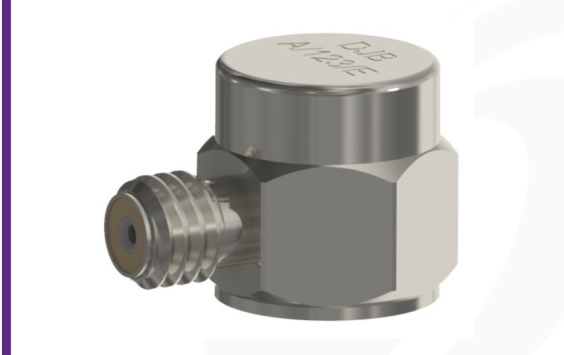
General-purpose, hermetically sealed, mono-axial IEPE accelerometer.
- Sensitivity: 1–100 mV/g
- Frequency: 0.7 Hz–11 kHz
- Temperature: −50 to +125 °C
- Weight: 3.6 g
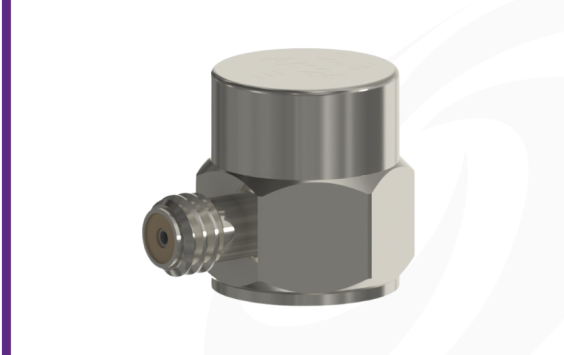
Miniature IEPE accelerometers, in top- and side-entry versions, built into satellites worldwide.
- Sensitivity: 1–100 mV/g
- Frequency: 0.7 Hz–13 kHz
- Temperature: −50 to +125 °C
- Weight: 2.1 g
Top-entry version: A/124TE/1
View all monoaxial IEPE accelerometers

Charge output for high-temperature testing, with top or side entry and adhesive, stud or ceramic-isolated mounting.
- Sensitivity: 8 pC/g
- Frequency: 0.7 Hz–11 kHz
- Temperature: −55 to +250 °C
- Weight: 3.4–3.6 g
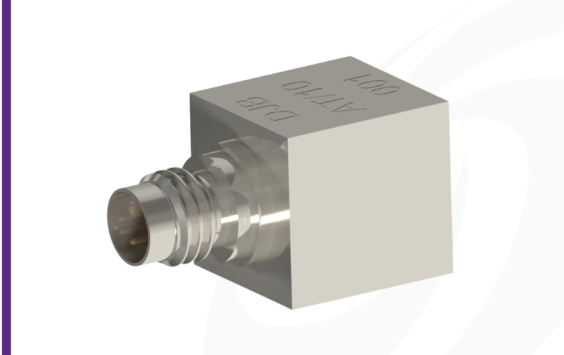
Triaxial IEPE accelerometer: three axes in one sealed sensor.
- Sensitivity: 1–100 mV/g
- Frequency: 0.7 Hz–8 kHz
- Temperature: −50 to +125 °C
- Weight: 6.9 g
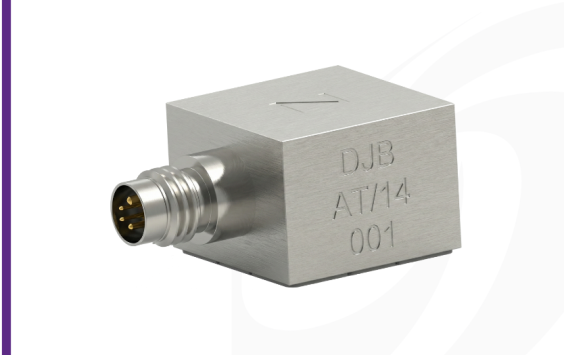
Triaxial IEPE accelerometer: three axes in one sealed sensor.
- Sensitivity: 1–100 mV/g
- Frequency: 0.7 Hz–7 kHz
- Temperature: −50 to +125 °C
- Weight: 13 g

Low-outgassing connectors and heat-shrink stress relief, with cable lengths and assemblies made to order.

Planning satellite qualification or vacuum testing? Come and see our miniature, hermetically sealed accelerometers and low-outgassing cables up close, and talk through your test set-up with our engineers. Prosig will be on the stand too, covering data acquisition and analysis.
Accelerometers for ground testing
In structural and environmental testing, the sensor must be light enough not to affect the structure, while staying accurate across a wide frequency range. We offer miniature, mono-axial and triaxial accelerometers, with IEPE or charge output.
Alongside the space range, commonly used models for aerospace vibration, modal and acoustic testing include:
- A/127 mono-axial IEPE accelerometer
- A/27 mono-axial charge accelerometer
- AT/01 tri-axial charge accelerometer
- AT/04 tri-axial charge accelerometer
In-flight health monitoring
DJB sensors also monitor engines and gearboxes in flight, where temperatures and stresses are high. Many are customised for specific aircraft platforms. If you need a sensor built around your application, talk to our engineers.
Low outgassing for space and vacuum testing
In a vacuum, materials can release trapped gases that contaminate optics and sensors. Everything installed on a satellite must meet strict low-outgassing requirements.
- All materials in DJB accelerometers meet low-outgassing requirements as standard.
- Around 90% of our cables are standardised to suit low-outgassing requirements.
- For space builds, connector stress relief uses a special low-outgassing heat shrink.
- Cable lengths and assemblies are made to suit your test setup.
Customers around the world have tested and verified that these materials meet the standard.
Tested on Earth, flown in space
Our A/124 miniature IEPE accelerometers are installed in satellites during the build, in both top- and side-entry versions, along with their cables and connectors. During environmental and structural testing, they monitor the satellite, giving the critical measurements that show a very expensive asset is fit for flight.
Because they're part of the build, they then launch with it, never to be seen again.
Flying today on: MetOp · Sentinel-6 · MSR-ERO
Trusted by satellite test teams including: RAL Space, Airbus, ISRO and HAL
Why aerospace engineers choose DJB
- Low-mass sensors that don't load the structure
- Hermetically sealed designs that can stay on board for launch
- Low-outgassing materials and cables as standard
- A proven record in satellite and aerospace programmes
- Custom cable assemblies and specialist ceramic-isolated mounting
- Designed and manufactured in the UK
Discuss your aerospace application
Precision vibration sensors for demanding aerospace testing and monitoring applications. Designed for accurate measurement across structural, acoustic and high-temperature environments.
Signal conditioning and measurement instrumentation designed to preserve data accuracy from sensor through to acquisition and analysis systems.
Low-noise cables, connectors and mounting accessories engineered to maintain signal integrity in harsh testing and operational environments.
Built to meet your exact application requirements and extend cable life
From ultra-flexible low-noise cables to armoured and miniature assemblies, DJB designs and manufactures bespoke cable solutions tailored to your installation and testing environment. Our inspection and repair service also restores damaged or worn assemblies, helping reduce replacement costs while ensuring continued measurement reliability.
Maintain measurement accuracy and confidence in your test data
DJB calibration services verify accelerometer performance and ensure sensors continue to meet required measurement standards throughout their operational life.
Choose the right sensor for your application
Understand how sensitivity, frequency range, mounting method and operating environment influence accelerometer performance.
Maximise measurement accuracy through correct installation
Learn how mounting techniques influence frequency response, signal quality and overall test reliability.
Engineering knowledge supporting accurate measurement
Access application notes, technical guidance, and reference material covering accelerometer selection, mounting methods, instrumentation considerations, and vibration measurement best practices.