A leading civil engineering consultancy used a Prosig system to map underground train vibration through boreholes, predicting its effect on new homes before they were built.
Project at a glance
- Customer: International civil engineering consultancy
- Applications: Environmental
- Products used: DATS-P8012 (P8012 chassis with two 8402 4-channel IEPE/direct input modules); DATS Toolbox
Background
It is well known that underground railways cause ground vibration. But is it possible to predict how new buildings constructed near or above an existing underground line will be affected? That was the question put to a leading international civil engineering consultancy, which came to Prosig for a measurement and analysis system.
The challenge
The consultancy needed to know whether noise and vibration from the underground trains would cause a nuisance in a proposed multi-storey housing block, and whether levels would fall within prescribed limits. To answer this, it needed a detailed study of how noise and vibration travel from the underground to the ground surface – before construction began.
The solution
Before work started on the building sites, boreholes were dug so that vibration could be measured at various depths. Using a Prosig DATS-P8012 data acquisition system and DATS software, with low-frequency triaxial accelerometers of extremely high sensitivity, the engineers captured the noise and vibration transmitted through the ground.
From these measurements, they built a 3D map of noise and vibration transmission across the potential sites.
The results
- A 3D map of vibration transmission across the proposed sites
- Data cross-referenced with other sites measured before and after construction
- The ability to simulate how underground vibration would affect buildings before they were built
- Evidence to check whether noise and vibration would fall within prescribed limits
Related products
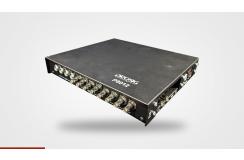
- No. of Channels: 8 to 24 (plus 2 tachos)
- Resolution: 24-bit
- Max Sample Rate: 300k samples/sec/channel (24-bit)
- Connectivity: USB
- Power: 10–36 V DC or AC mains adapter