

DATS Modal Analysis and Structural Animation
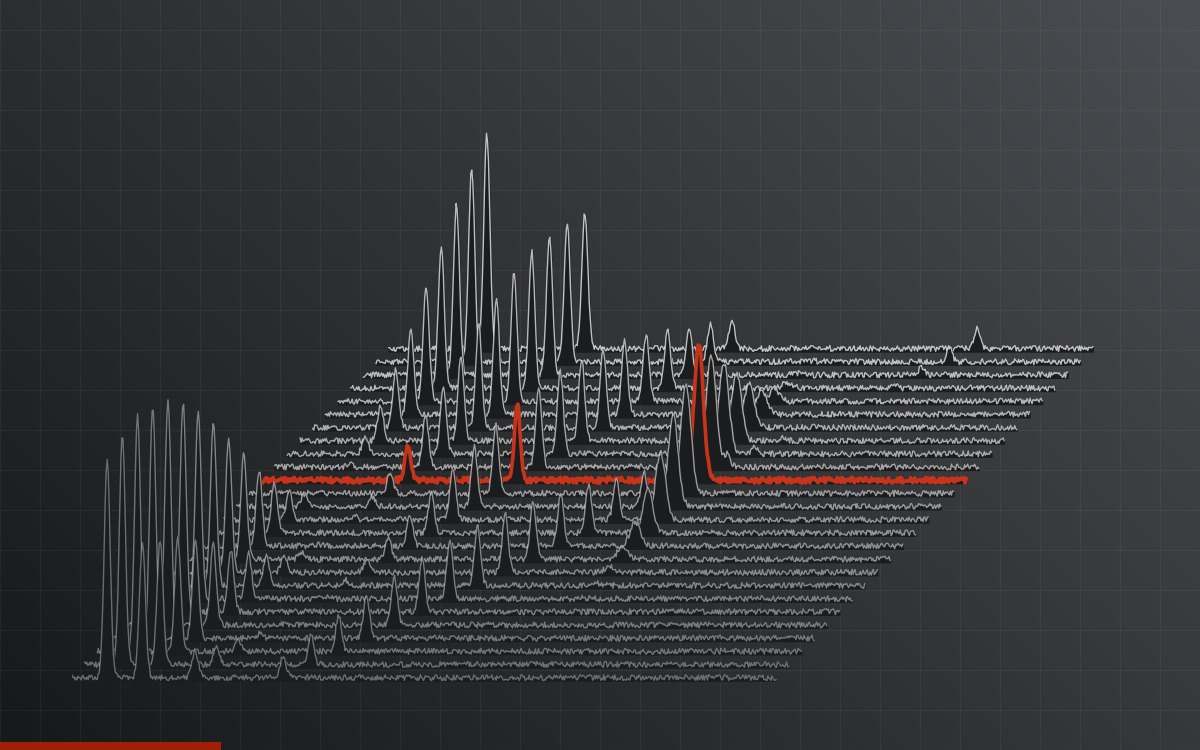
Understand how your structures vibrate, and see them move
- Add-on packages for DATS-core
- Experimental (EMA) and operational (OMA) modal analysis
- Identify modal frequencies, damping factors and modal amplitudes
- Curve fitting with half-power, SDOF, MSDOF, MDOF and ERA-DC methods
- Stability diagram, FRF synthesis and forced response prediction
- 3D animation of mode shapes and operating deflection shapes
- Built-in hammer acquisition and export of animations to video
Description
DATS Modal Analysis and DATS Structural Animation are add-ons for DATS-core that help you understand how a structure behaves dynamically, from identifying its natural frequencies and damping to watching it move in three dimensions.
DATS Modal Analysis
DATS Modal Analysis is for analysts who want to determine modal frequencies, damping factors and modal amplitudes from measured frequency response functions (FRFs), impulse response functions or response-only data. A choice of frequency and time domain identification methods is provided to extract these parameters.
The identified mode shapes can be displayed and animated with DATS Structural Animation. A synthesis module regenerates FRFs from the identified parameters, showing how accurately the modal model fits, and forced responses can be predicted by convolving the regenerated FRFs with simulated or known force inputs.
Features included
- Parametric identification of modal frequencies, damping factors and modal amplitudes
- Frequency and time domain methods: half-power estimates, SDOF, MSDOF, MDOF and ERA-DC
- Operational modal analysis (OMA) methods: FSDD (frequency domain) and ERA-DC (time domain)
- Stability diagram to help select genuine modes
- FRF synthesis from modal parameters
- Forced response prediction
DATS Structural Animation
DATS Structural Animation brings your measurements to life by showing how a structure actually moves.
- Frequency animation uses the magnitude and phase of FRFs, FFTs or cross spectra at each measurement point to reveal the motion at different frequencies.
- Time animation uses time-based data to show the true position of each measurement point at each time step.
Structures are represented by two or three-dimensional space-frame models, created in a fully featured 3D graphical editor or imported from NASTRAN, CSV and Universal files.
Features included
- Animate data in the time or frequency domain, including operating deflection shapes
- Fully featured, easy-to-use model editor
- Split-view display with video-style playback and navigation
- Built-in interactive hammer acquisition for immediate results
- Interactive band-pass and band-reject filtering in the time domain
- Real-time animation overlays for instant comparisons
- Stress, vibration and intensity colour maps, magnitude and divergence, and nodal persistence displays
- Acceleration, velocity and displacement readouts
- Support for CAE and SAE coordinate systems
- Import geometry from NASTRAN and generic CSV files
- Export animations to video for presentations and sharing results
- Many examples and templates to get you started
For fast, guided hammer impact testing, see DATS-HITS. Find out more about Prosig solutions for aerospace and advanced engineering, or contact our team for advice.
Media
Related products
Compatible with
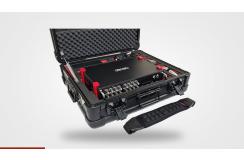
- No. of Channels: Up to 32 (plus tachos)
- Resolution: 24-bit
- Max Sample Rate: 400k samples/sec/channel
- Connectivity: Gigabit Ethernet, USB
- Power: Battery, 10–36 V DC or AC mains
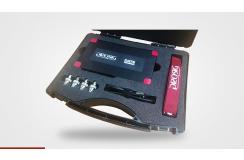
- No. of Channels: 4 (IEPE, voltage or tacho)
- Resolution: 24-bit
- Max Sample Rate: 144k samples/sec/channel
- Connectivity: USB-C
- Power: USB powered
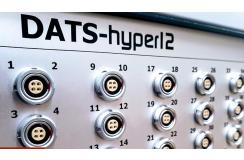
- No. of Channels: 96 per unit, stackable to 1,000+
- Resolution: 24-bit
- Max Sample Rate: 300k samples/sec/channel (24-bit)
- Connectivity: Ethernet, USB
- Power: Mains or vehicle
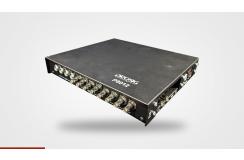
- No. of Channels: 8 to 24 (plus 2 tachos)
- Resolution: 24-bit
- Max Sample Rate: 300k samples/sec/channel (24-bit)
- Connectivity: USB
- Power: 10–36 V DC or AC mains adapter